


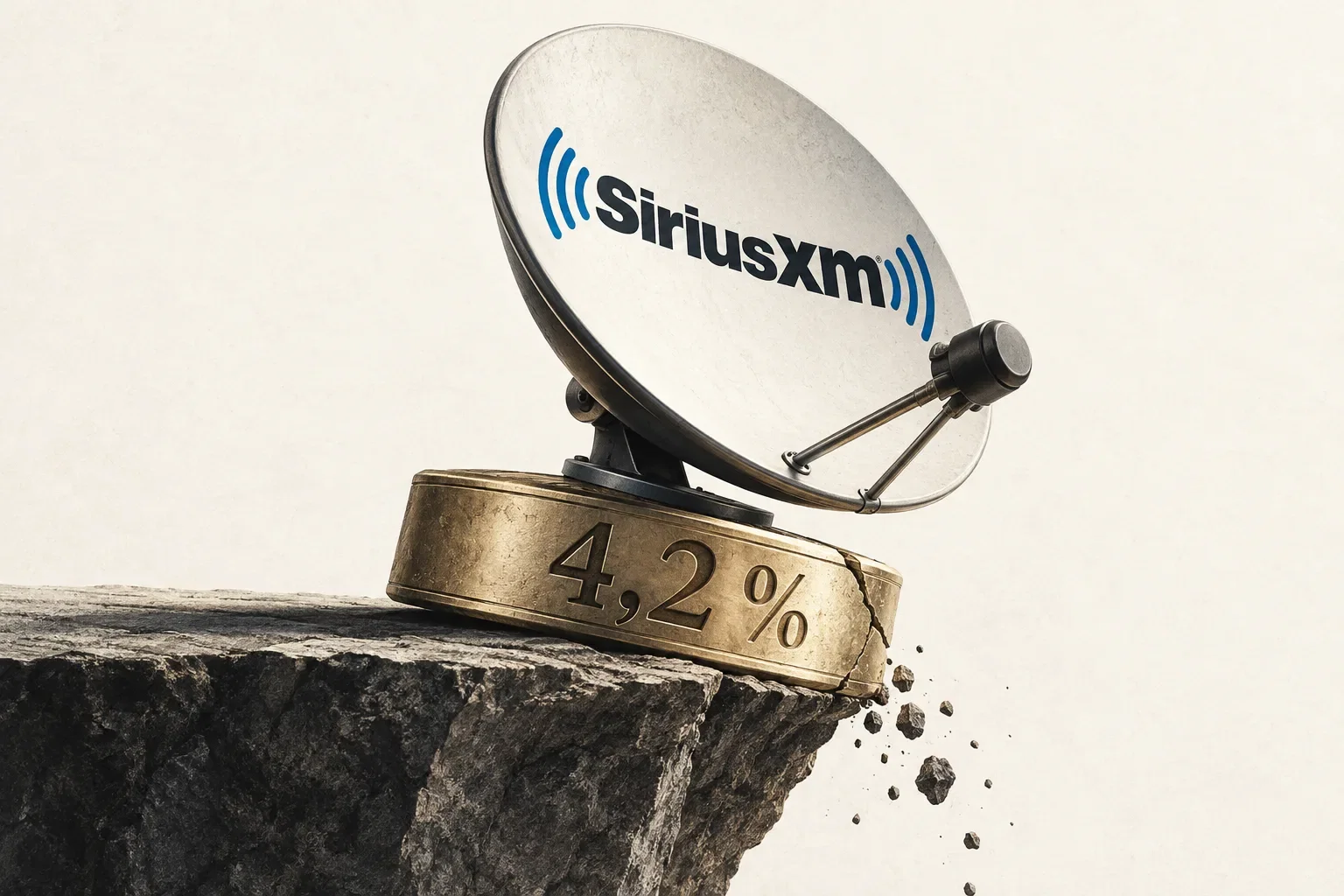
A 4.2% dividend and Buffett as co-owner. So why are investors selling?

The stock Buffett bought for years pays 4.2% a year and has lost a fifth of its price since July. The company just reported its best numbers in four years. Either the market sees something that isn't in the numbers, or it is overlooking a turnaround that has already begun.
Key points
Berkshire holds 37% of this company, yet the stock has lost 58% of its value over the past five years
For the first time in four years, the company added paying subscribers; the market reacted to that news with a 6.5% drop
The dividend hasn't changed by a cent, yet the yield jumped to 4.2% in two and a half months
There is an asset on the balance sheet that led Wells Fargo to revise its estimate from $1 billion to $4.9 billion
October 29 will decide which of three scenarios kicks in for the stock, and one of them costs investors money
How a 4.2% annual yield is created: all it takes is for the stock to fall by a fifth
On July 30, Sirius XM $SIRI stock was at $32.59, a few cents below its yearly high. Today it trades around $26 and the company's market value has shrunk to about $8.7 billion. That's a drop of a fifth in two and a half months.
The quarterly dividend of $0.27 hasn't changed by a cent. It amounts to $1.08 a year, and because the denominator has shrunk, the yield jumped to 4.2%. Nothing improved in how much the company pays. What worsened is how much investors are willing to pay for it.
Add one fact that doesn't fit the story of a dying radio: Berkshire Hathaway holds 37% of all shares, a position worth about $3.2 billion that was built by Warren Buffett himself. And yet the stock has lost 58% over five years. So for years the market has been selling a company that the world's most famous value investor was buying for years. And this summer it has been selling it even though its numbers are improving. Who is wrong?