


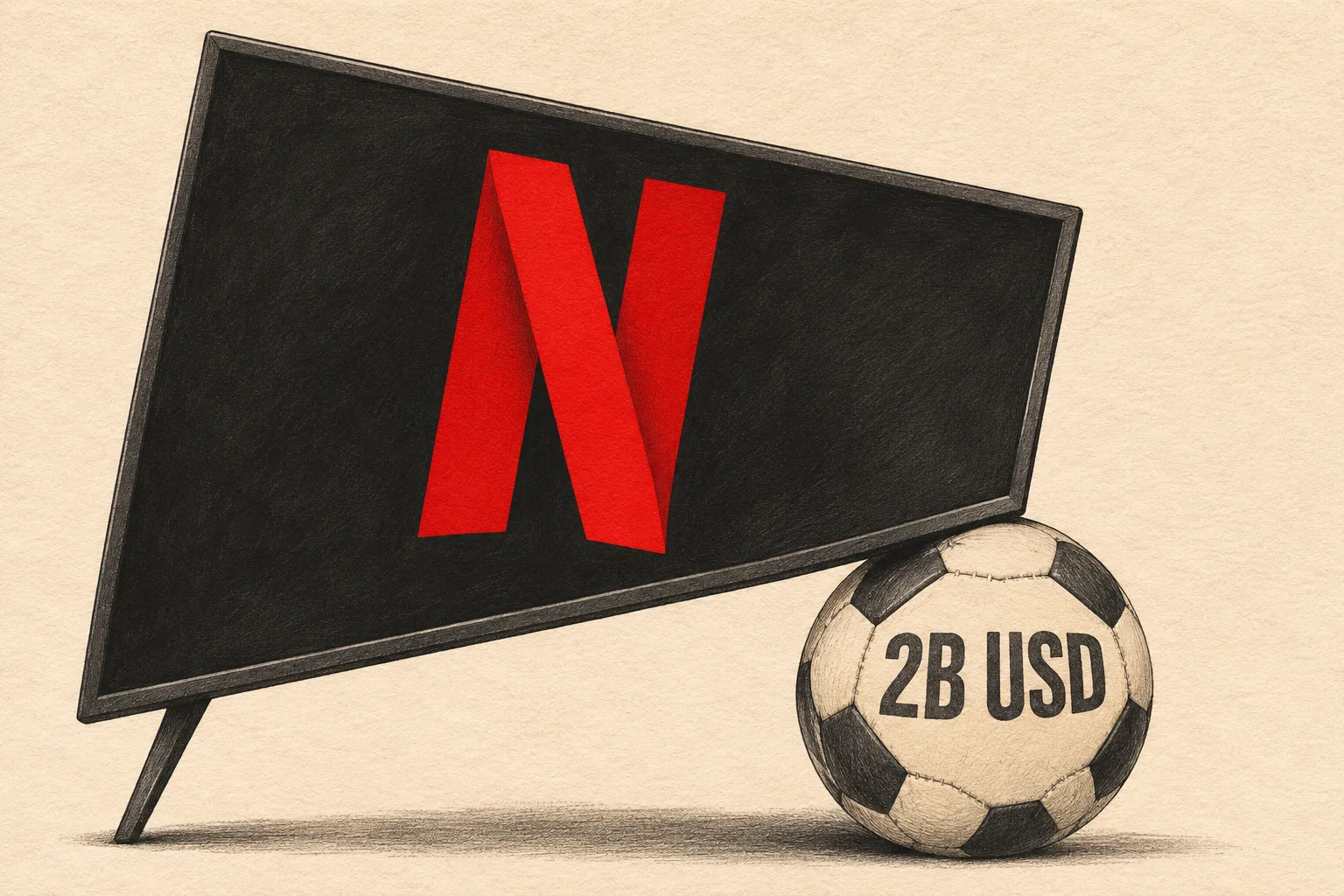
Is $2 Billion Worth of Soccer a Cure for Netflix's Stock Slide?

51.7 million Americans watched this year's World Cup final at its peak, so Netflix is bidding for the next one too, even though its games will be played at noon in the US. Its stock has lost 45% in a year, and ESPN, the best at sports, didn't even submit a bid this time.
Key points
Disney's ESPN broadcast the World Cup for twenty years, but didn't submit a bid at all this year.
Netflix has lost 44.7% of its value in a year, despite revenue and profit growing at a double-digit pace.
The 2030 tournament games will be played at noon in the US, yet streaming companies are fighting over them.
As recently as 2022, Netflix's CEO explained why the company steers clear of major sports.
The market now values Netflix at a multiple of 16, while its five-year average is 41.
At noon on Thursday, the most expensive soccer rights in America were up for grabs
At noon New York time on Thursday, November 19, the deadline passed for companies to submit their first bid to FIFA for US broadcasting rights to the 2030 FIFA World Cup, with the option to bundle in the 2034 tournament too. Netflix $NFLX was in line alongside Amazon, YouTube, and Fox. Missing, however, was the company everyone would have expected most: Disney and its sports network ESPN, which had broadcast the World Cup for twenty years. Apple and Skydance didn't enter either.
That same day, Netflix stock closed at $58.46. That's practically its lowest price in the past 52 weeks and roughly half what the stock was worth at its peak in 2025. It lost 44.7% in a year, while the S&P 500 index gained almost 10%. Investors who held Netflix as a safe bet among tech stocks thus lost almost half their money, and this in a company making more money than ever.
And this very company is now bidding for the most expensive sports rights ever sold in America. Estimates range from $1.5 to $2 billion for a single tournament. Yet just four years ago, its CEO publicly explained why the company steered clear of major sports: he had never seen how they could make money.
At first glance, it doesn't make sense. A company that rejected sports suddenly wants them, while the company best at them has walked away from the table. But the reason ESPN left is the same reason Netflix stayed. And it has to do with what cost the stock those 45%.